After a jolly Christmas holiday, you come home, get your suitcases and head to the car park, only to discover that your car won’t start. The lights on the dashboard flicker, the engine doesn’t turn over, or the start button doesn’t work.
A car battery after holiday is a bummer at the end of any vacation, particularly with kids and lots of luggage or a long drive home. All of these can contribute, such as cold weather, an aging battery, and electrical equipment that are still active. Fortunately, a flat battery does not always require replacement. Here are the things to look out for, how to seek help safely, and how to minimise the risk on your next trip to the airport car park.
Why Can a Car Battery Go Flat During a Christmas Holiday?
Your car is continually consuming a small amount of electricity when parked. Security alarms, keyless entry, and on-board electronics can consume power when the car is turned off. Starting is more difficult in cold weather since batteries give less power during cold weather, and a weak battery can wear out and finally give up after being left unused for days or weeks.
Common causes include:
- Old battery: May not have enough charge.
- Winter cold weather: This can exacerbate existing battery issues.
- Electrical accessories: Interior lights, dashcams could still be consuming electricity.
- Repeated discharges: It may be due to underlying faults such as an alternator or electrical system failure.
- Short trips: Shorter trips may not allow sufficient charge to the battery.
The car will not necessarily have a flat battery even if it has been parked for a couple of days. If it occurs on a regular basis, have a battery and charging system check. If you have a flat battery, please read the RAC’s advice for guidance.
What Should You Do First If Your Car Won’t Start?
If you’re having trouble getting the vehicle running, first find out if the battery may be the problem.
- Inspect the dashboard and central locking: When central locking is malfunctioning, dashboard lights may not be bright enough, or the engine may start slowly; the battery could be discharged. The fast clicking may also be a sign of lack of power, but it is not definitive.
- Check for noticeable issues: See if anything (headlights, interior lights, accessories) is left on. Do NOT try to jump-start if the battery is swollen, cracked, leaking, or visibly damaged. Seek professional assistance.
- Consider your location. If you’re at an airport car park, be sure you’re in a safe area before getting help and never put someone’s car in the way. Call the parking company for help getting in or out, or if you need to know where the pickup points are for the breakdown club.
How to Start a Car with a Flat Battery Safely?
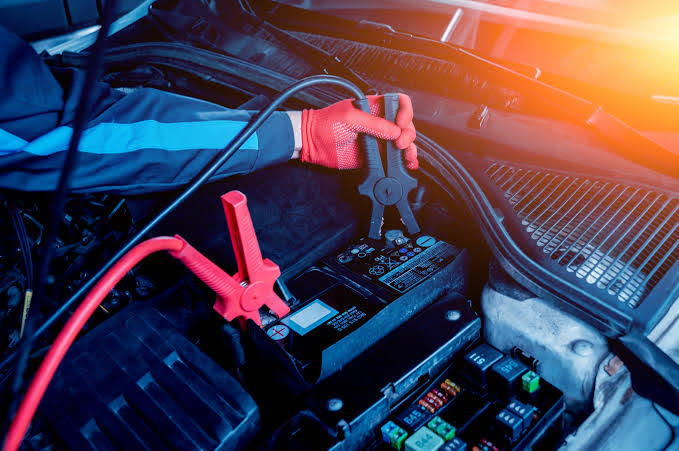
A jump-start might generate just enough electricity to start the engine, but it is important to follow the proper procedure, depending on the specific vehicle.
- Check the owner’s manual first:
There are specific requirements for modern cars, hybrid vehicles and electric vehicles, and incorrect connections could result in damage to electrical systems.
- Call a breakdown service:
When you don’t know how to jump-start, it’s typically best to call for assistance. A technician will be able to test the battery, may be able to restart it and recommend charging or replacement. Before accepting a call out for payment, see your breakdown cover.
- Connect with a suitable jump-start pack:
A portable pack can be handy when it fits in your vehicle and is fully charged. Use manufacturer-provided connections and directions according to the handbook.
- Connect with other vehicles using jump leads:
This can be done, but the wrong connections can be hazardous or damage the equipment. For both vehicles, follow the directions. A hybrid or electric vehicle must be a type approved by the manufacturer to be used as a donor.
The RAC provides a step-by-step guide to jump-starting a car.
What if your car starts up and the battery dies again?
Once the engine is started, the problem is not solved. A jump start will only give enough jolt of electricity needed to start the car, and a short drive into town may not be enough to charge a depleted or weak battery if it was left in an extremely discharged condition.
After restarting:
- Follow the technician’s instructions for charging and testing.
- Look for battery warning and charging system warning lights.
- If the car is having trouble starting up, set up a battery test.
- Investigate repeated discharge rather than relying on more jump-starts.
- If the battery keeps going flat, the cause could be a worn battery, a faulty alternator or an electrical drain.
Useful tips on avoiding battery drain on vacation.
The safest way to prevent a flat car battery during the holidays is to minimize the risk prior to departing.
- Check the battery before travelling:
If you’ve had a problem starting your car or your battery is several years old, plan to get the car tested before you go.
- Turn off unused apparatus:
Turn off and unplug items that could continue to
consume power. Do not disconnect systems that have to remain operational – follow your handbook instead.
- Take into account a battery maintainer:
A compatible smart maintainer can assist in maintaining the car charge, if it remains in the garage for extended durations without being used. Don’t just take it for granted that charging station equipment can be plugged into at an airport car park.
Make it a part of your pre travel routine. It’s so much easier to find a weak battery at home than after returning from a late night and finding a car that won’t start. For more planning advice, read 10 Questions Smart Travellers Ask Before Booking Airport Parking.
Should a Car Battery Dead After Holiday be replaced?
If a car battery dead after holiday, that does not necessarily mean that it needs to be replaced. If the battery is discharged, it can be recharged to become usable; if it is worn or damaged, it may no longer have enough capacity to start the car.
It can be determined through a battery test, and the technician might suggest battery reconditioning, battery replacement, or additional inspection of the charging system. If a car continues to fail to start after being parked, have an inspection done beforehand before using the vehicle on a long trip.
What If Your Car Has Been Parked at the Airport?
A flat battery is particularly troublesome when you are still at the airport and have to drive home. Adhere to the car park’s procedures and see if the car park can send breakdown assistance. Restrictions on access and assistance areas are different from provider to provider.
- Park & Ride:
Check with the Park & Ride provider for directions or assistance at the Park & Ride location.
- Meet & Greet:
Check with the provider where they are meeting or how/when they’ll collect.
- Off site parking:
Communicate with site team regarding parking of assistance vehicles.
Airport Cheap Parking is not a car park operator or breakdown service, it’s a comparison site for independent third-party car parking operators. Call the company that owns your car, and make different arrangements for vehicle breakdown assistance.
When it comes to airport parking, don’t just focus on the headline price. Convenience is influenced by the arrangements for transfer, instructions on access and return. Having a car park won’t solve battery issues; knowing what to expect on the way back could make the process easier.
Final Thoughts
After a holiday, you may find you have a flat battery, and that can be an unwelcome stalling point. Examine the symptoms and do not attempt an unsafe jump-start; if you are not sure what to do, get professional assistance; if the battery is damaged, do not attempt to jump-start it.
Prior to your next journey, make sure to look at your battery, turn off unnecessary electrical accessories, and ensure you have a way to enter your car when you arrive back. Looking for a new Christmas vacation? Use Airport Cheap Parking to compare appropriate parking choices and select the one that is within your travel dates, budget, and schedule.